
Time for transparency: How data can hold BC’s involuntary treatment system accountable
Text in graphic blocks along the left that reads “Time for transparency: How data can hold BC’s involuntary treatment system accountable. Data on involuntary detention and treatment in BC is incomplete. This makes it hard to know how often it is used, who is experiences it, and what the impacts are. What can we learn from the information we do have?” To the right of the text is an image of a person with a shaved head, walking down a path away from us.
It’s no secret that the Mental Health Act grants BC’s health system some of the most serious state powers authorized in Canadian law. It grants the powers to detain, to administer injections and electroconvulsive therapy without consent, to “discipline” patients in any way, to mechanically restrain, and to confine alone in a seclusion room. When someone experiences detention and involuntary treatment, we need ways to be sure they will be treated with respect and dignity and that there are ways to address improper use of power.
Large gaps in data related to involuntary detention and treatment in BC makes it very hard to understand how often involuntary treatment is used, who experiences it, and how it impacts them. For example:
Most provincial data only includes people admitted involuntarily to inpatient units in hospitals because it relies on the Discharge Abstract Database. It typically does not include people detained in emergency departments or tertiary mental health facilities. This means BC’s data on the rates of involuntary treatment underrepresents how often involuntary treatment is actually used.
Provincial data used for systemic monitoring often includes only people detained under the Mental Health Act with a mental health disorder as the main focus of their treatment. This excludes people who are detained and treated involuntarily for a mental health disorder as a co-morbidity or for an unspecified mental health diagnosis. Again, this leads to an undercount in provincial data.
Most provincial data does not include children and youth under 16 who are detained at the request of their parent or guardian. Again, this means that BC’s data underrepresents how often children and youth are detained and given psychiatric treatment without their consent.
BC does not collect or report demographic data aside from age and biological sex, so we cannot understand how often specific communities, like Indigenous, racialized, or gender diverse people, experience involuntary treatment or how it impacts them. This can make it impossible to identify systemic trends or potential discrimination.
Our previous work to outline five types of oversight and accountability that should be built into all mental health systems includes two important elements for effective oversight and accountability. Two of these elements are:
Data: Data should be collected in an ethical way to monitor how the law is being used.
Transparency: Data, information, and records are accessible to allow meaningful public analysis of how the system is working.
This post is an example of how publicly available data could be used to improve transparency and accountability in BC’s involuntary treatment system. While BC’s data collection and reporting needs improvement in many ways, there are aspects of the involuntary treatment system we can understand by looking at the data that does exist.
We analyzed data in three key areas that, together, offer a look into:
who experiences involuntary treatment
what their experiences might be like including seclusion and restraints
how well legal safeguards are working
1. Who experiences involuntary treatment?
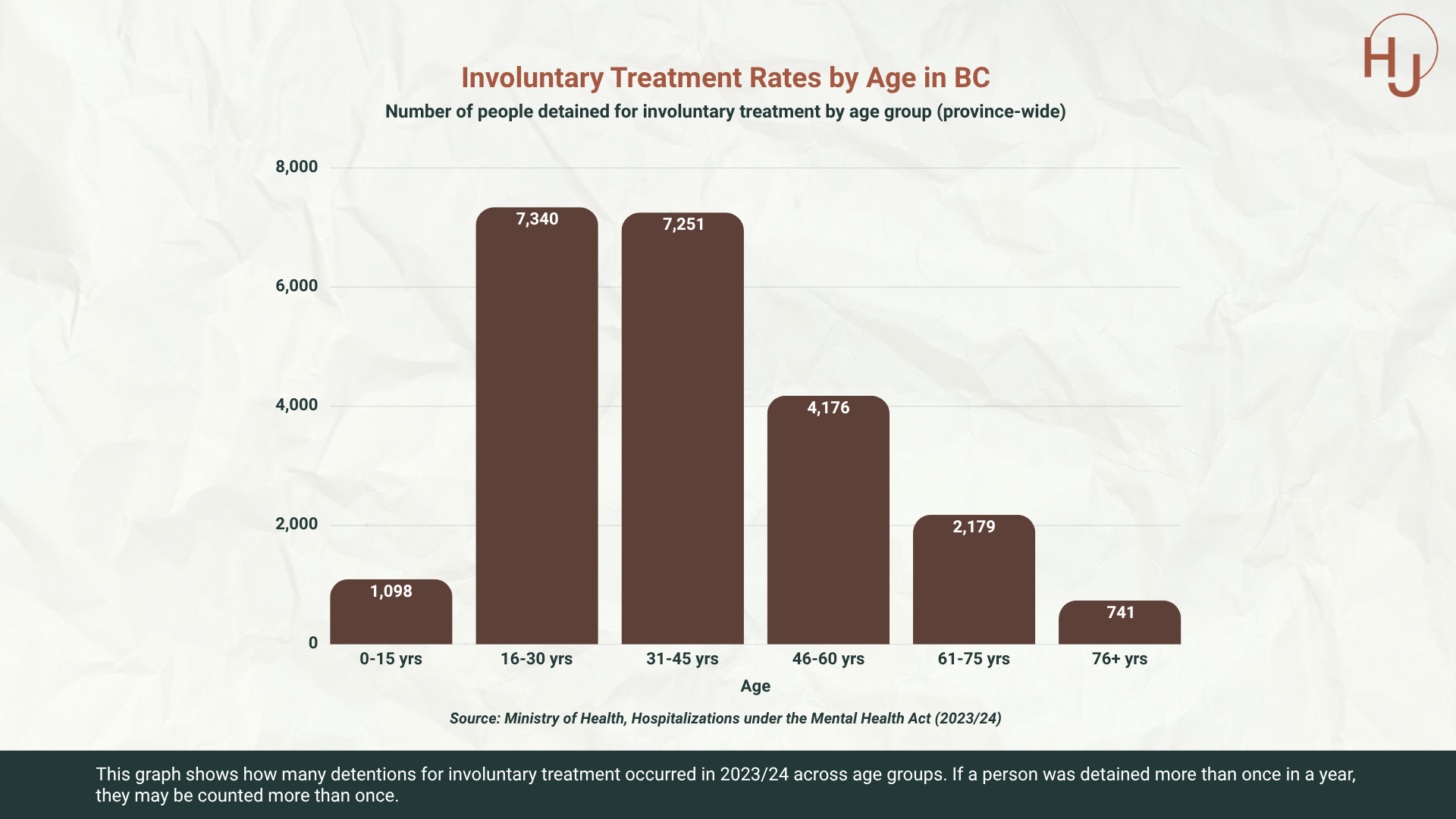
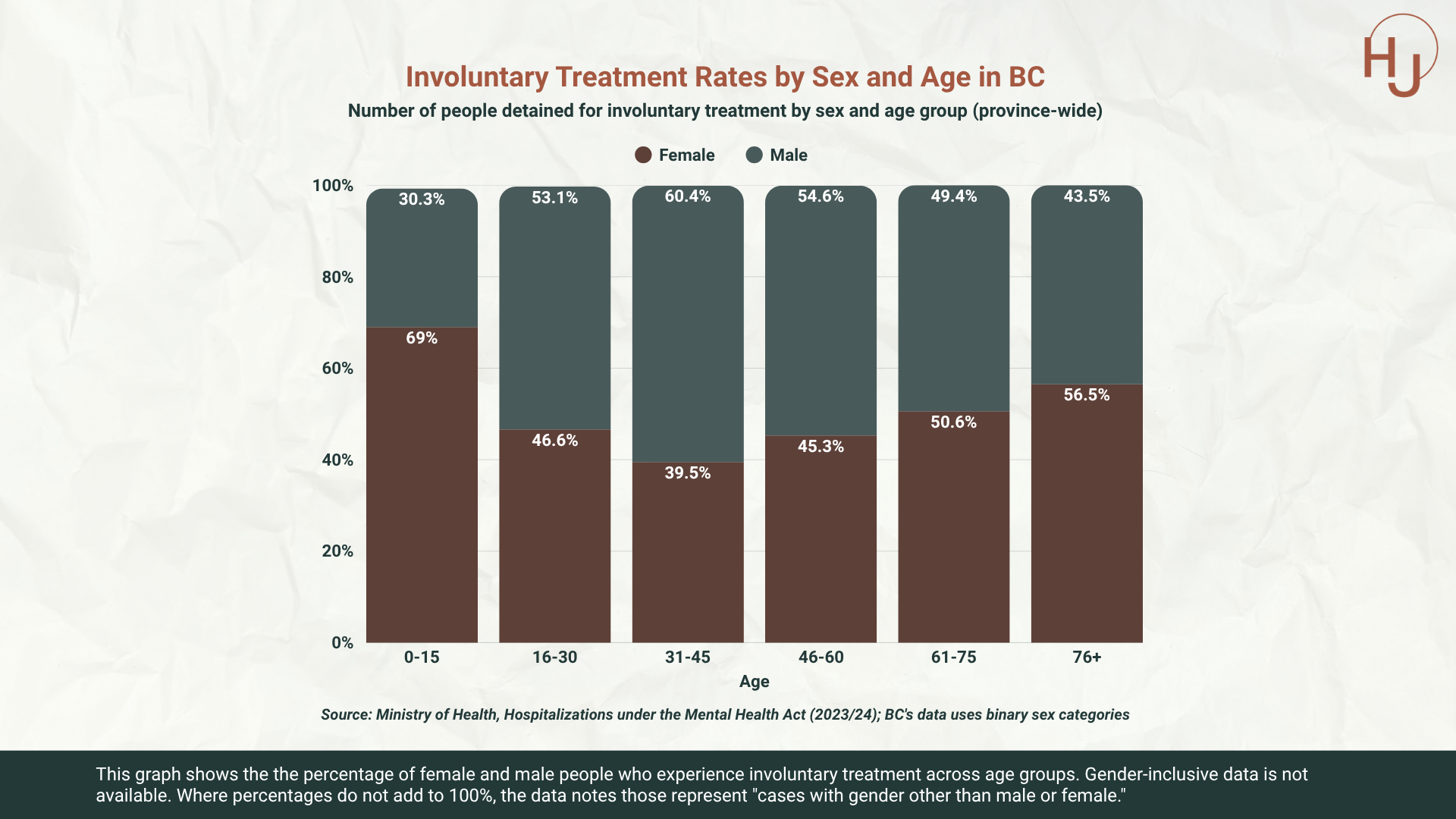
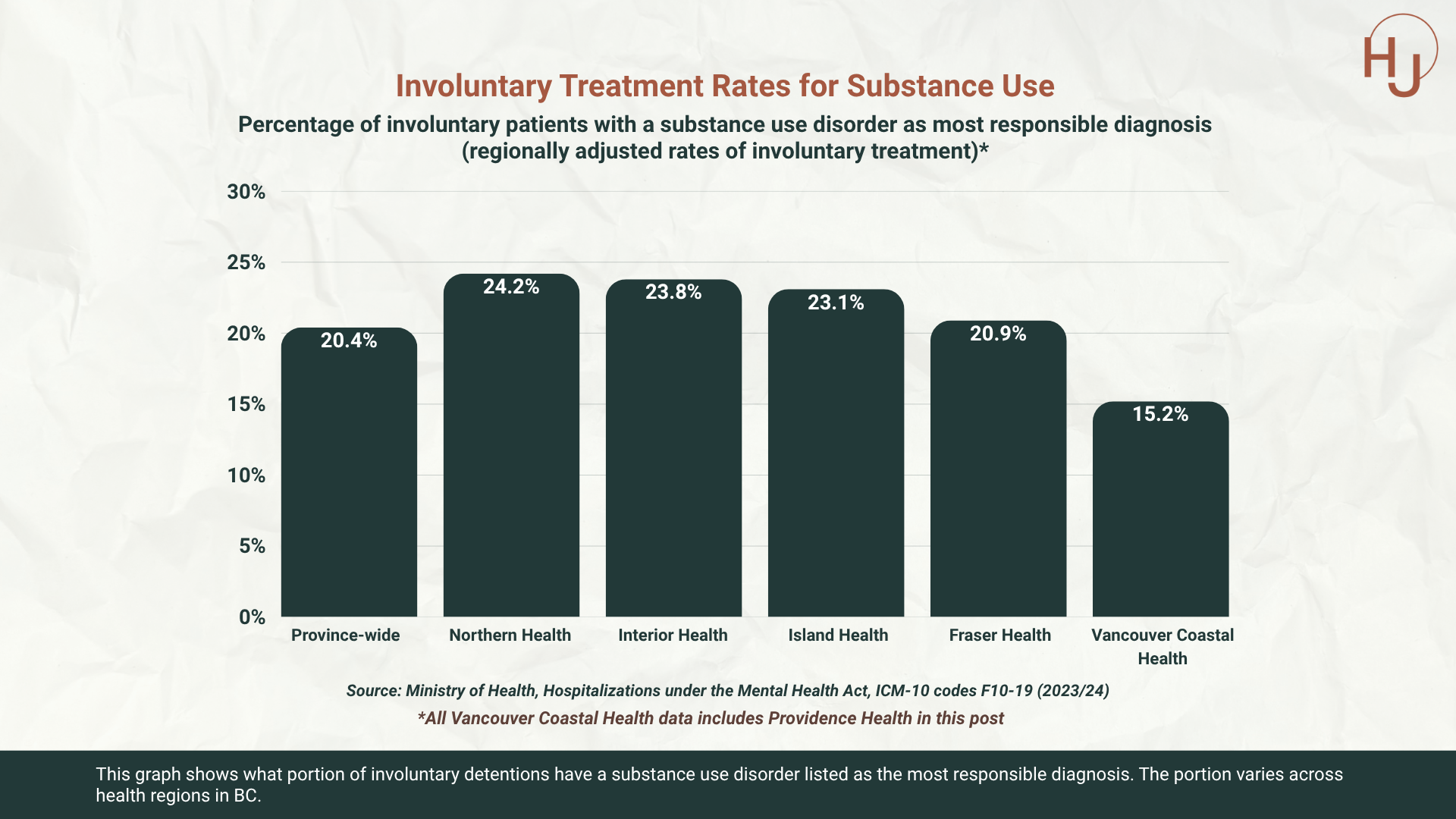
This data tells us about people who experience involuntary treatment under the Mental Health Act in a year. It shows information about age, sex, and how often involuntary treatment is used on someone experiencing a substance use disorder.
BC does not collect or report data on other important aspects of a person’s identity that impact how they experience involuntary treatment, which you can learn more about here.
2. What do we know about the experience of involuntary treatment?
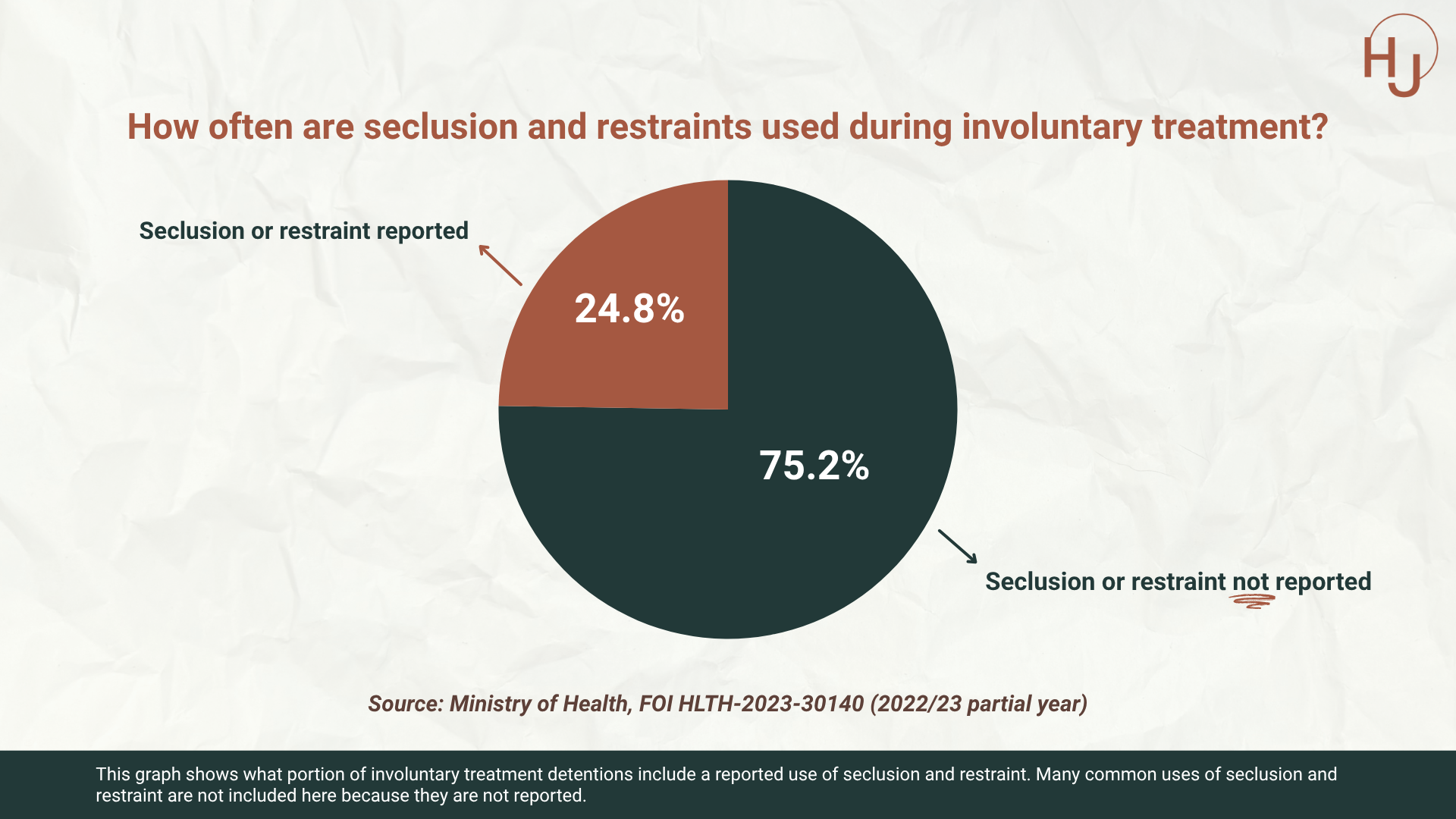

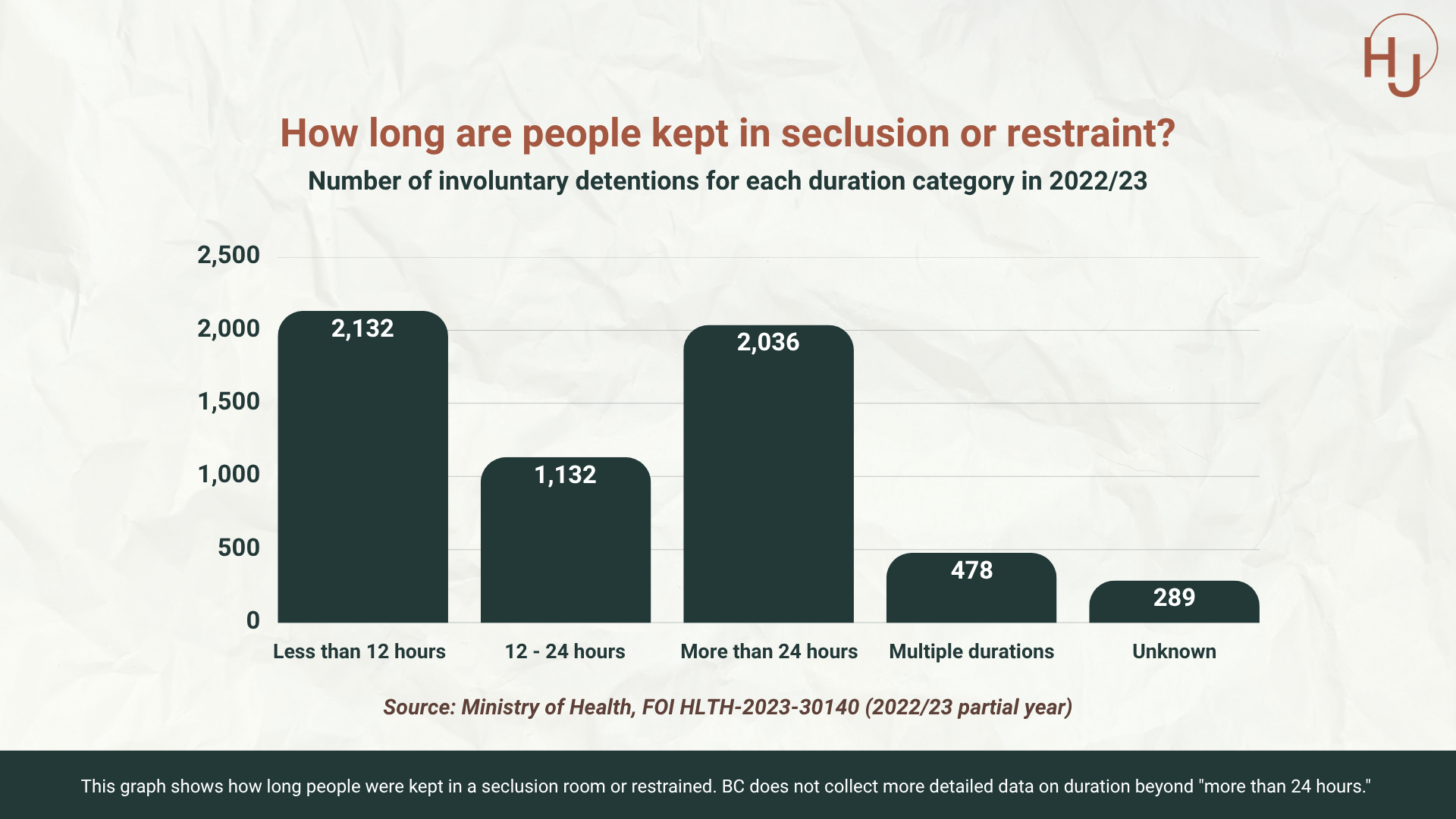
BC collects very little data about how people experience involuntary treatment, whether they find it helpful or harmful, and what specific aspects of it result in those positive or negative impacts.
Since 2020/21, BC has collected data related to the use of seclusion and restraints, practices that have no therapeutic benefit, but are used regularly in response to perceived risks. There is strong evidence that their use can be very harmful for the people who experience them or even witness their use.
3. How well are legal safeguards working?
Is the health system complying with the law?
Both the Charter of Rights and Freedoms and the Mental Health Act require the health care system to:
tell a person why they are detained
have valid consent or authority to administer involuntary treatment
inform a person of their rights
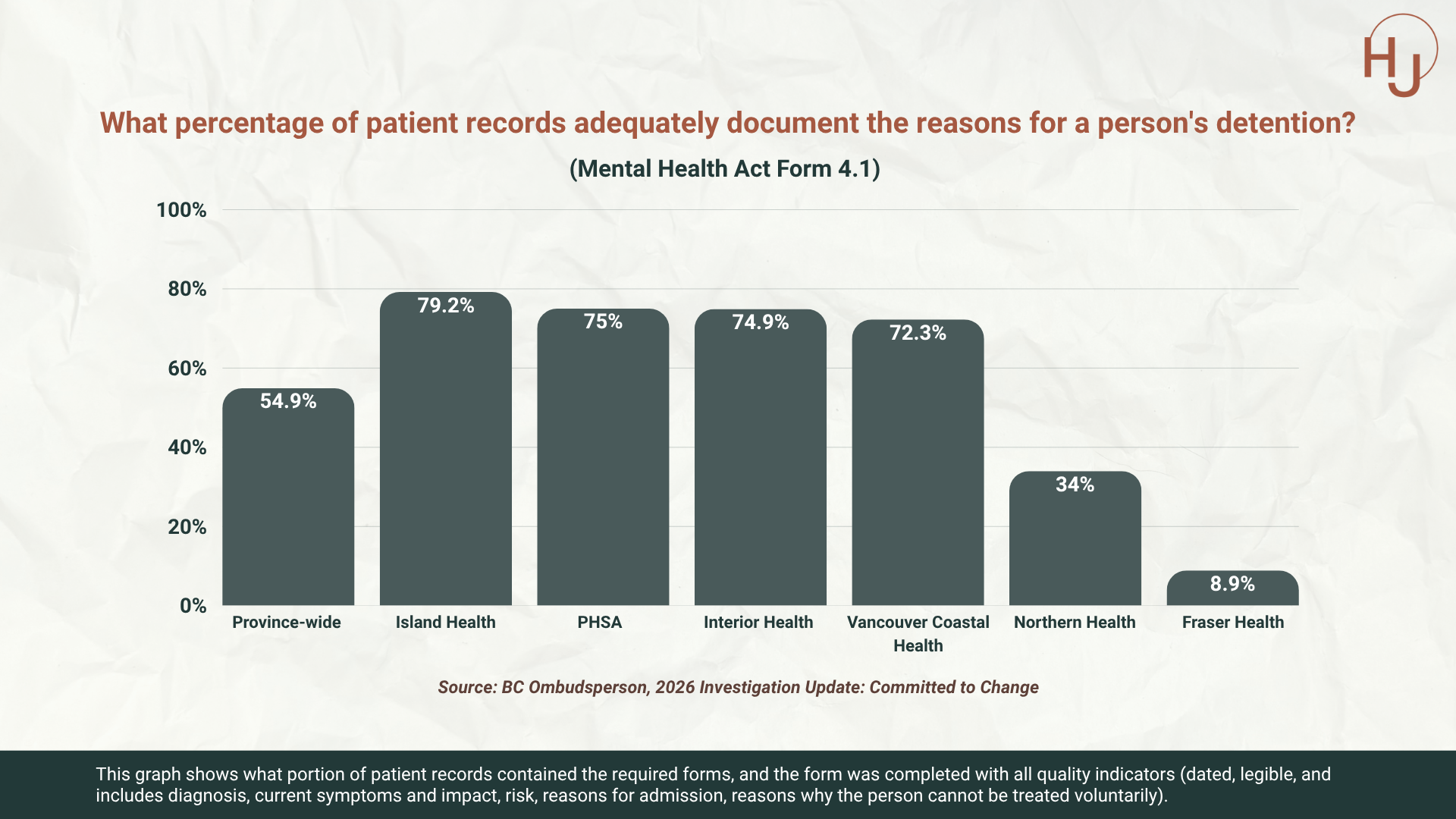
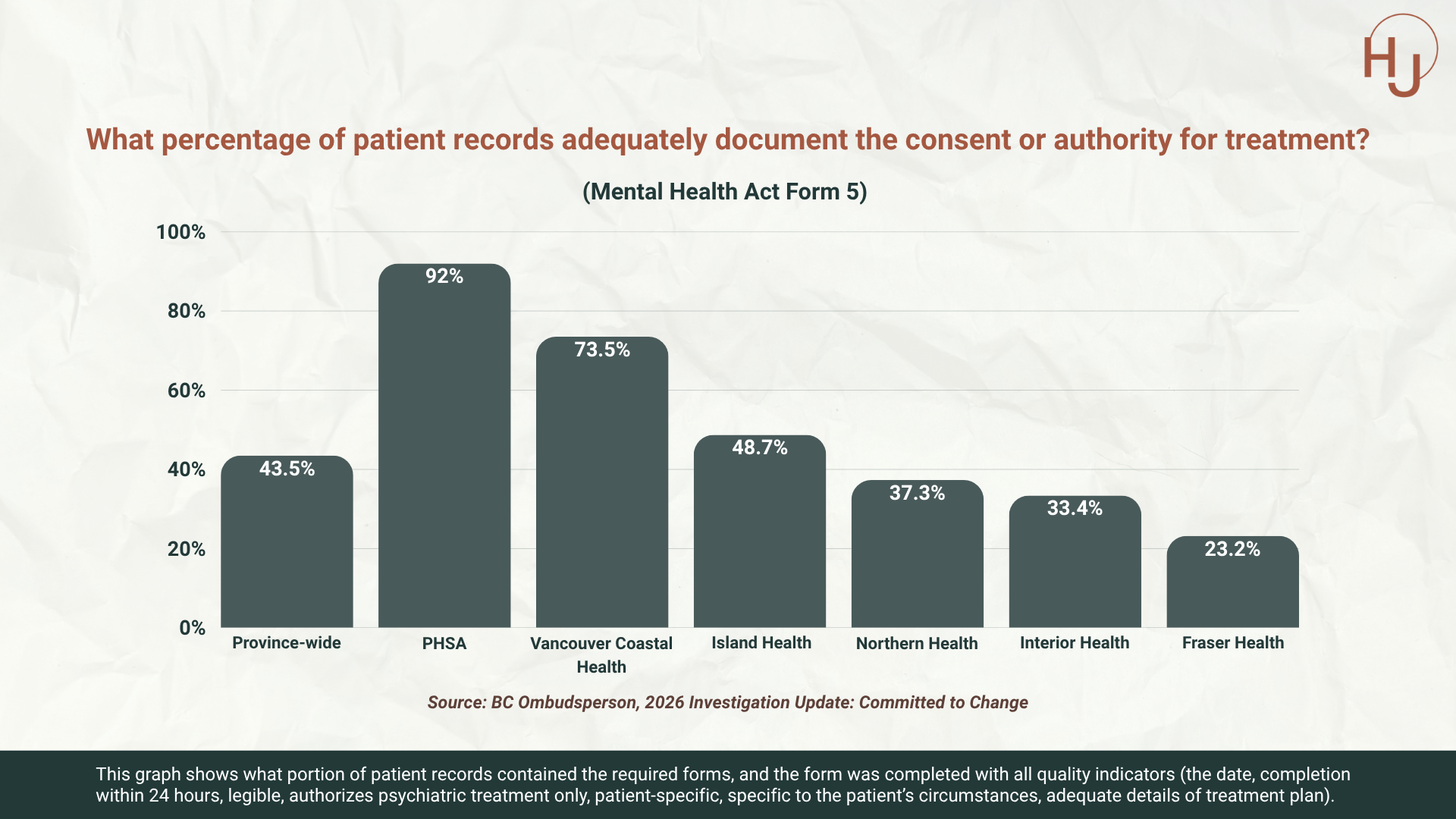
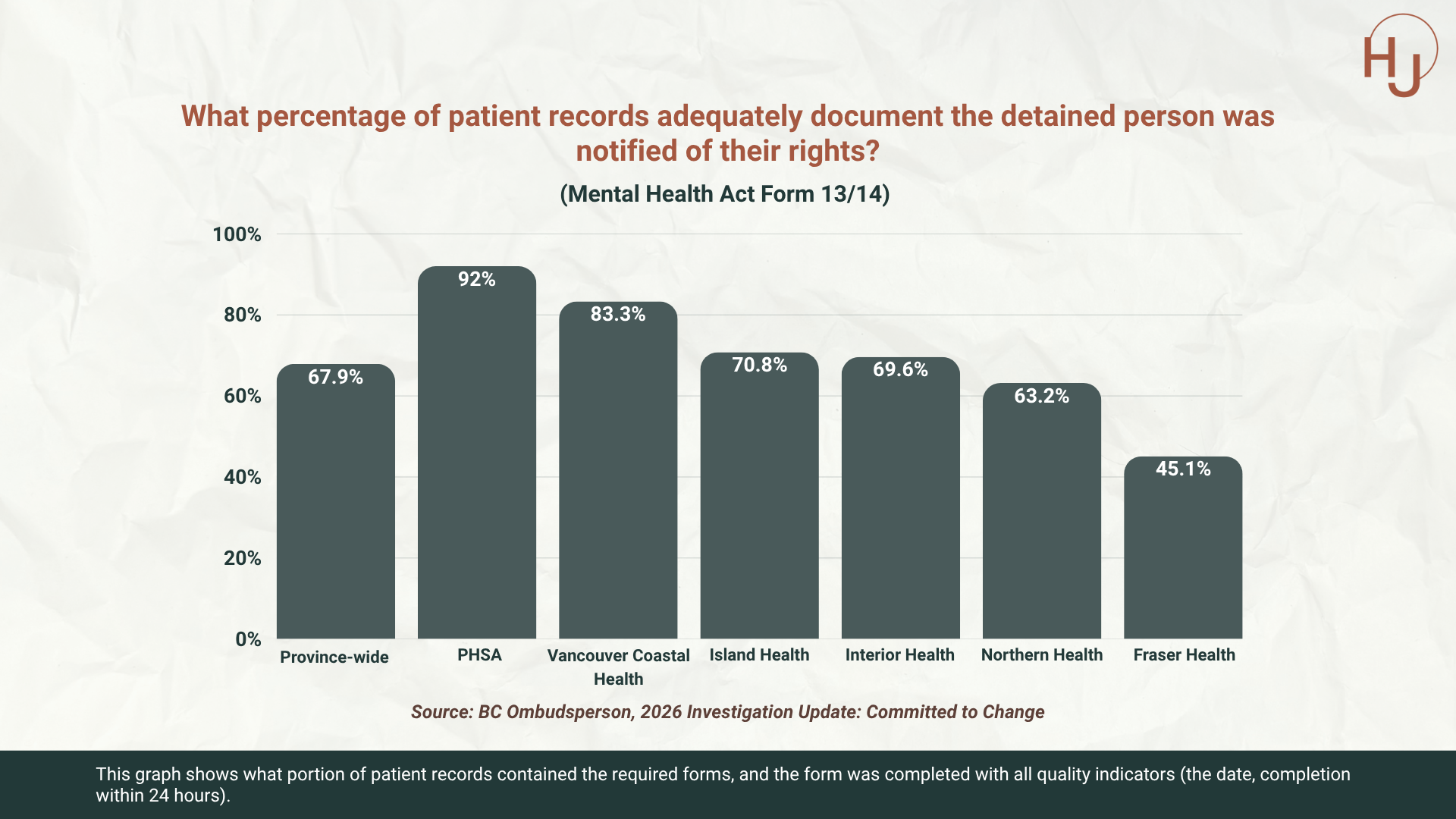
This data tells us how often the health system is complying with these legal requirements listed above, including any variation across health regions in BC.
The ongoing lack of compliance with the law, and progress to try to address this lack of compliance, has been the subject of an independent investigation by the Office of the Ombudsperson of BC. This data could help target and monitor these efforts.
How often can people exercise their rights?
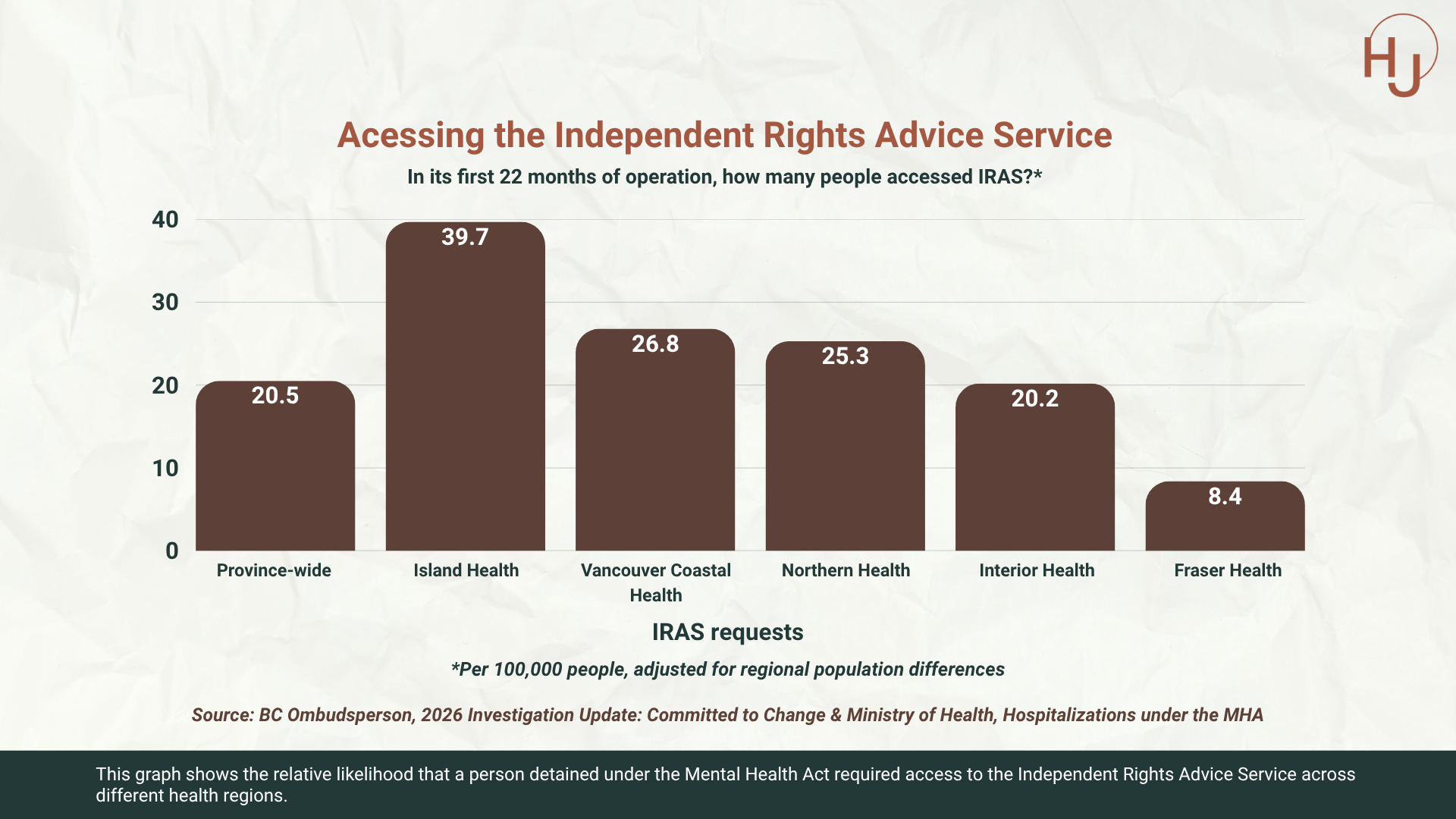
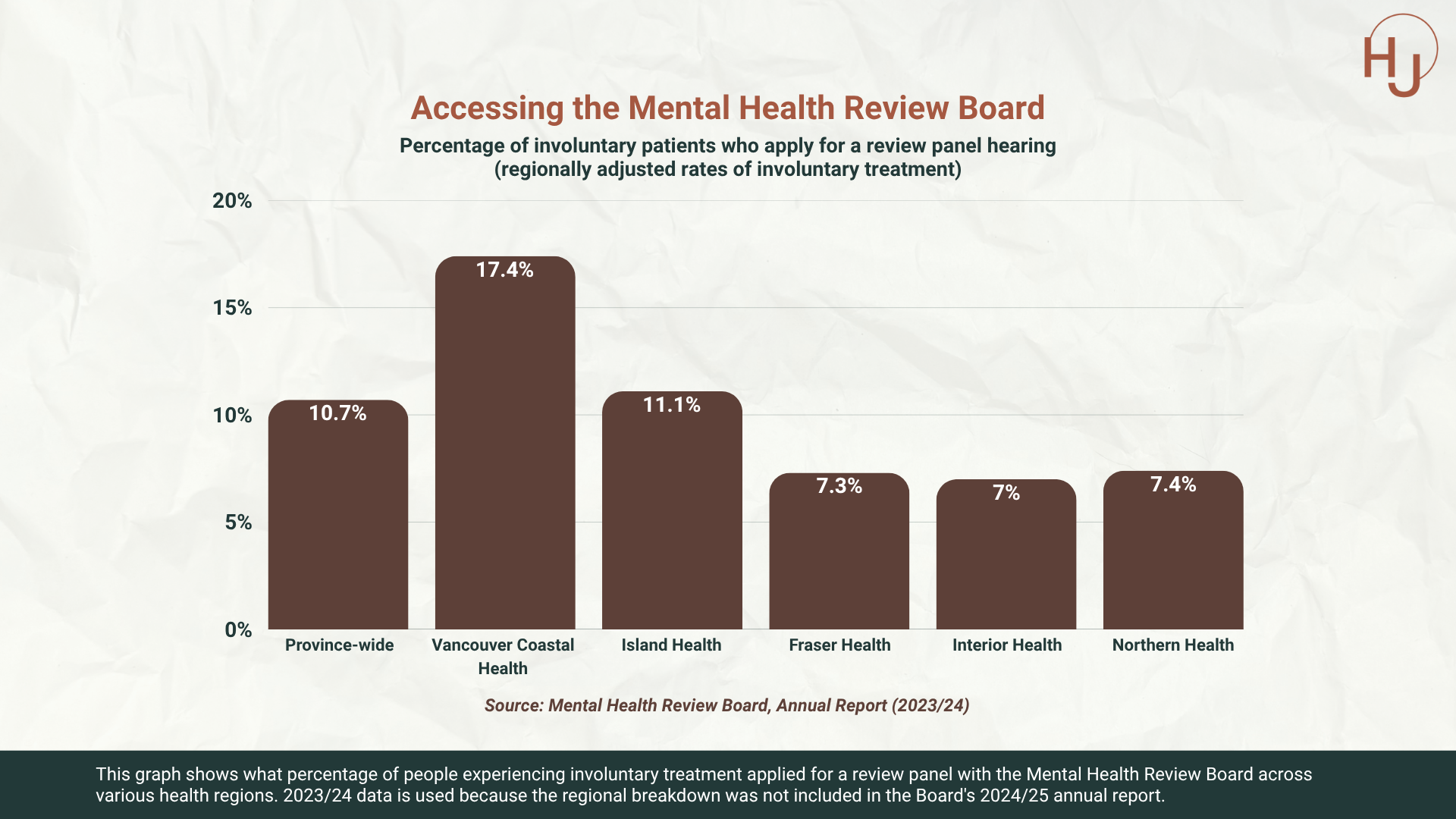
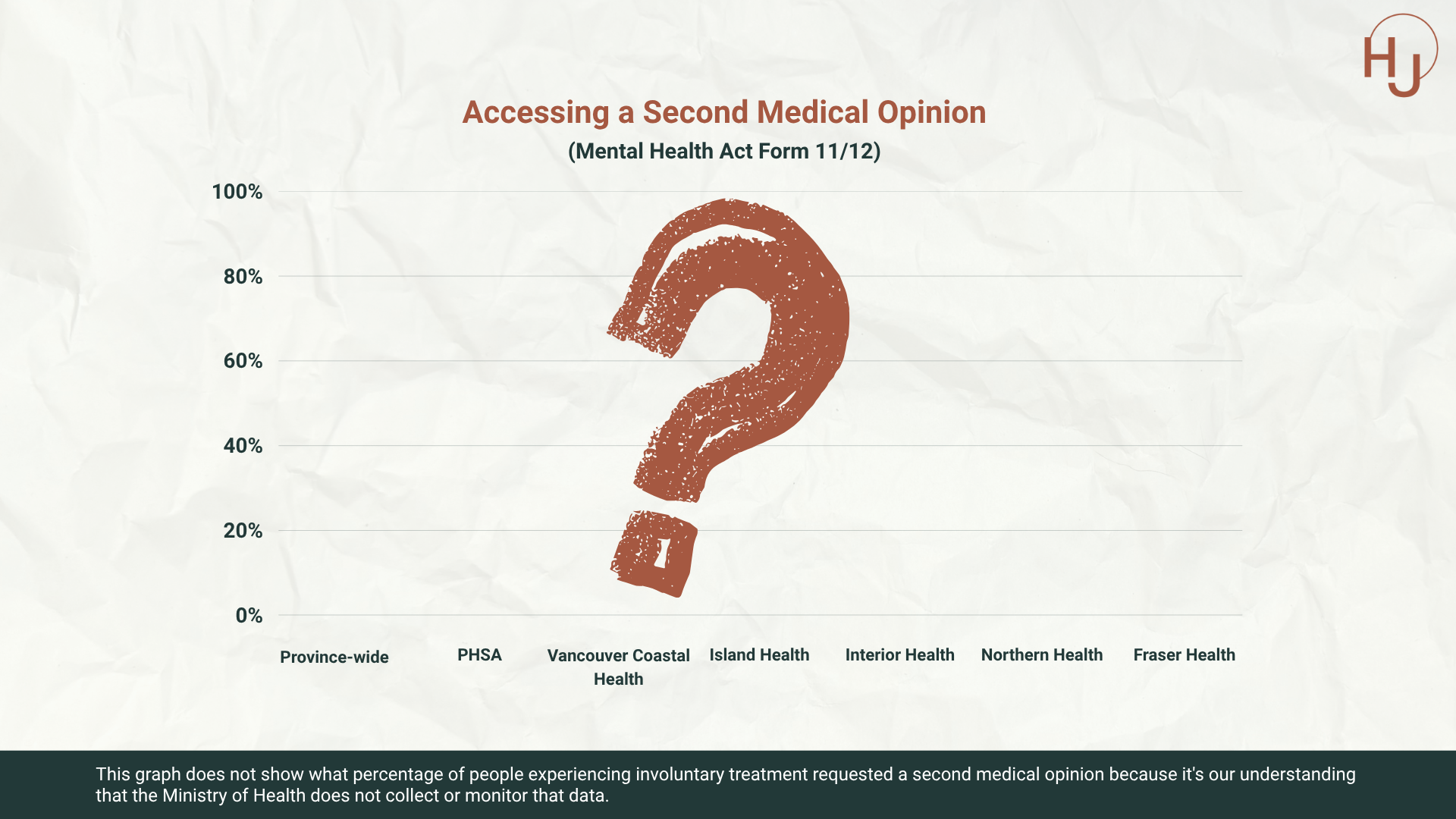
The Mental Health Act creates safeguards to ensure that a person experiencing involuntary treatment has some of their rights protected. This data shows how often people are accessing each safeguard.
While not every person experiencing involuntary treatment might choose to access every safeguard, this data shows how accessible each option is in general. It could also help identify and monitor inconsistent access throughout BC.
This data does not illustrate the many aspects of involuntary treatment under the Mental Health Act that have no safeguards in place. For more information, see our oversight and accountability work.
The importance of data for oversight and accountability
Data is not the only way we can understand and monitor BC’s mental health treatment system. A person’s experience of involuntary treatment, and its impacts on their wellbeing, rights and dignity, cannot be understood through statistics alone. However, ethically collected data that is shared transparently is a crucial part of healthy accountability and oversight in a mental health system. It is especially important in BC because other key foundations are missing that would allow policy makers and the public to understand and monitor the impact of involuntary treatment.
BC’s existing data is limited and flawed in a number of ways. However, even the data we do have can be used as an example to show how simple, transparent reporting could contribute to meaningful improvement in oversight and accountability.
Did you find this interesting? Share this post!