Blog & Media Coverage
Search the blog using the search bar below.
Latest Blog Posts
Time for transparency: How data can hold BC’s involuntary treatment system accountable
Data on involuntary detention and treatment in BC is incomplete. This makes it hard to know how often it is used, who is experiences it, and what the impacts are. What can we learn from the information we do have?
Use of force to administer psychiatric treatment requires transparency and full debate at a minimum
On April 1 the BC government introduced a bill (Bill 16: 2026 Miscellaneous Statues Amendment Act) amending the Correction Act that, if passed, will have serious impacts. Bill 16 expands when provincial corrections officers are authorized to use physical force. It expressly authorizes corrections officers to use force to assist health care providers to administer involuntary treatment under the Mental Health Act.
The Mental Health Review Board has released its Annual Report
The Mental Health Review Board recently released its 2024/25 Annual Report, which provides us with some insights into how people detained under the Mental Health Act are accessing detention reviews. It also provides a window into how well this particular safeguard is working.
More documentation of human rights violations in BC’s involuntary treatment system
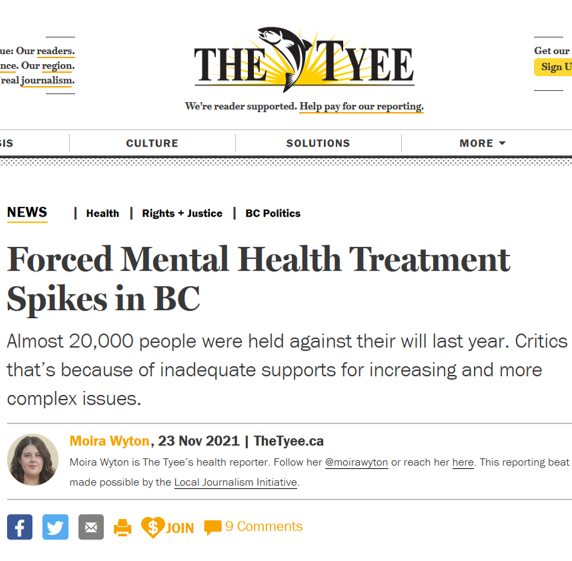
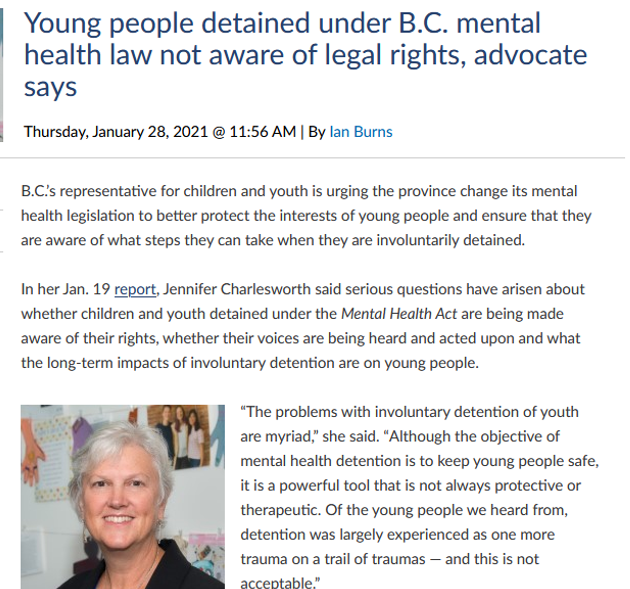
Two more independent reports documenting violations under BC’s Mental Health Act have been released since December. These reports from the Representative for Children and Youth and the Ombudsperson showed human rights violations and legal compliance violations.
Why does gender matter in mental health law and services?
Binary ideas of gender, sex and sexuality have resulted in inequity for cis and trans women and girls; Two-Spirit, trans, and non-binary people; and other gender-diverse people. The health system, and mental health system in particular, has a long history of pathologizing people who do not conform to the current norms, social roles, and behaviours expected in relation to gender, or erasing and ignoring their health needs and concerns.
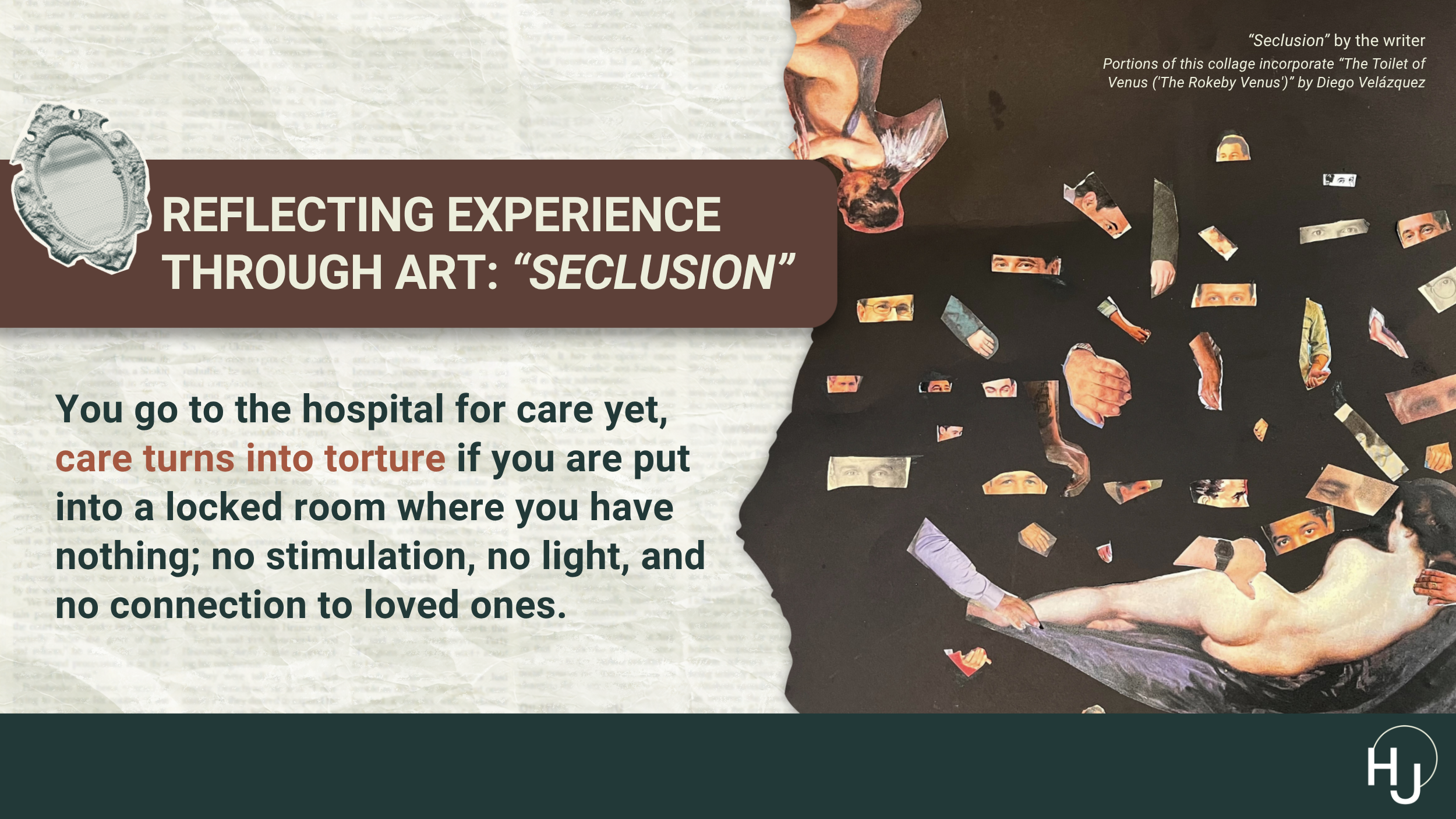
Seclusion and Restraints in BC: What we know and what we don’t
The use of seclusion and restraints is normalized in BC’s mental health system. BC’s Mental Health Act does not place any limits on when, how, or why someone can be subject to seclusion or restraints. Lived Experience Experts have shared that seclusion is often used in situations well outside those that could be considered a short-term emergency measure. We have gotten access to data on seclusion and restraint use through a Freedom of Information (FOI) request submitted in 2023. Part of acknowledging systemic harm is making it visible. Data collection and transparency is one of the most basic ways to bring the use of seclusion and restraints into the light. It is a necessary first step towards evaluating a system with few limitations and safeguards.
Featured Blog Posts









Media Coverage